
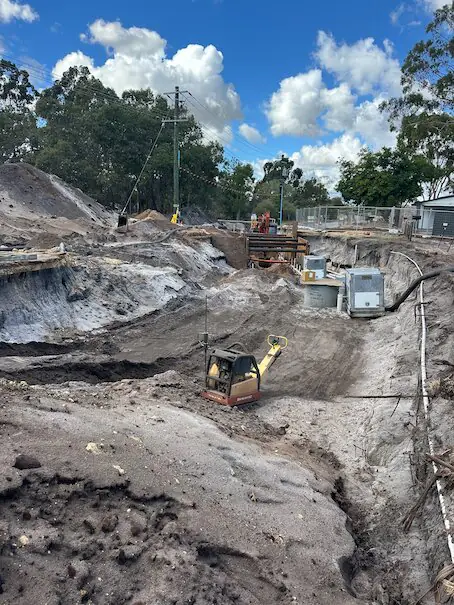
Exclusion zones, spotters and radio discipline — how USCM keeps people out of the swing, the haul route and the reversing path.
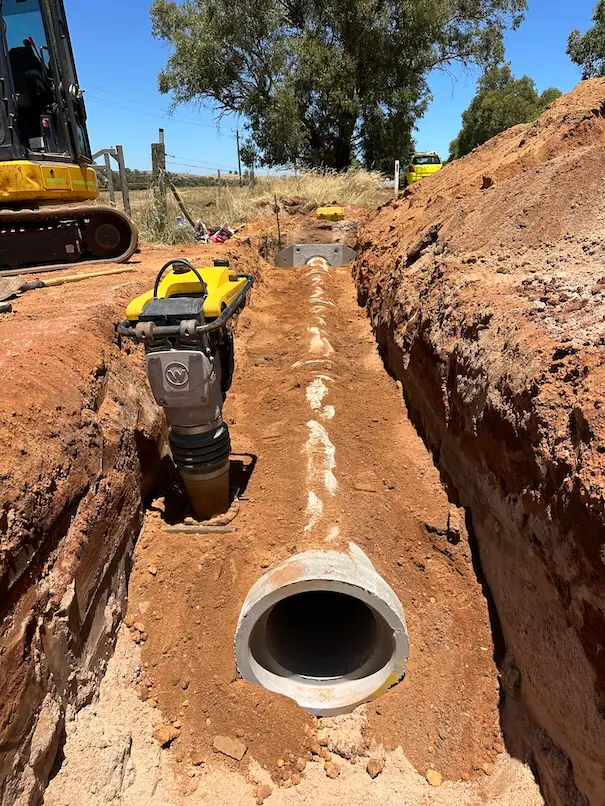
Most serious civil incidents happen when plant and people share the same space. Excavators, loaders, tippers and rollers move faster than foot traffic, and a person on the ground does not always see them coming. Separation is a control, not a courtesy.
Set the zone before the machine starts
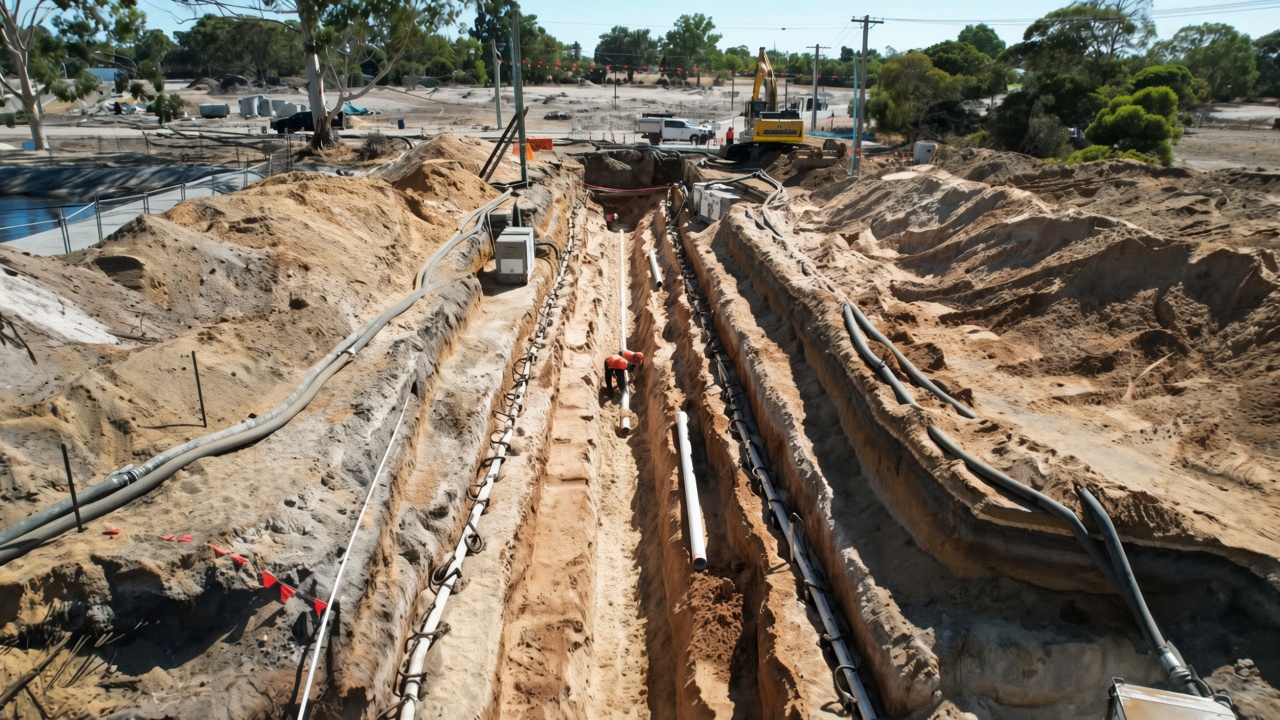
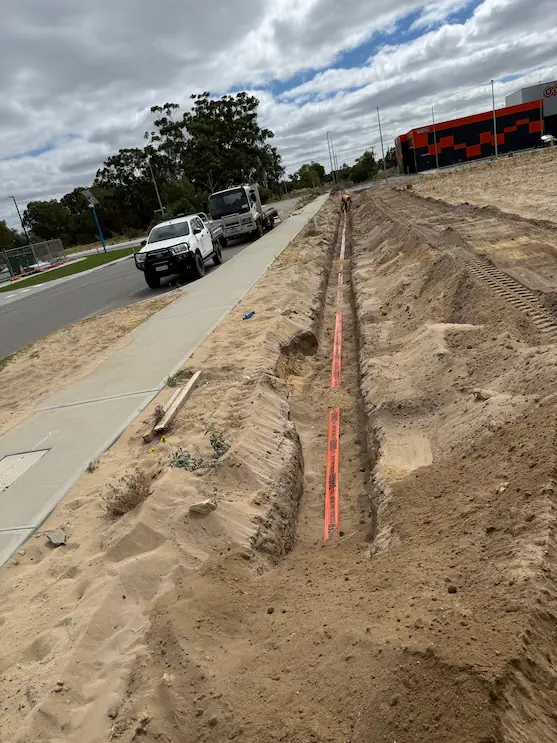
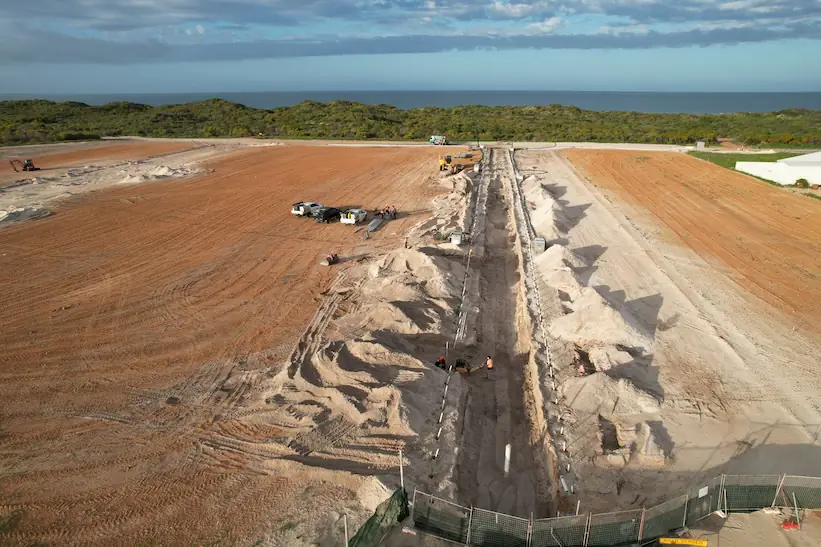
Before plant moves, the supervisor marks the swing radius, the haul route and the reversing area. Spotters are told who they are protecting and how the radio call works. Pedestrian paths are kept off the dig so people are not cutting through an active excavation to save a few steps.
Only the people who need to be there are inside the zone. Visitors, following trades and delivery drivers stay outside until the machine is stopped and the operator has acknowledged them.
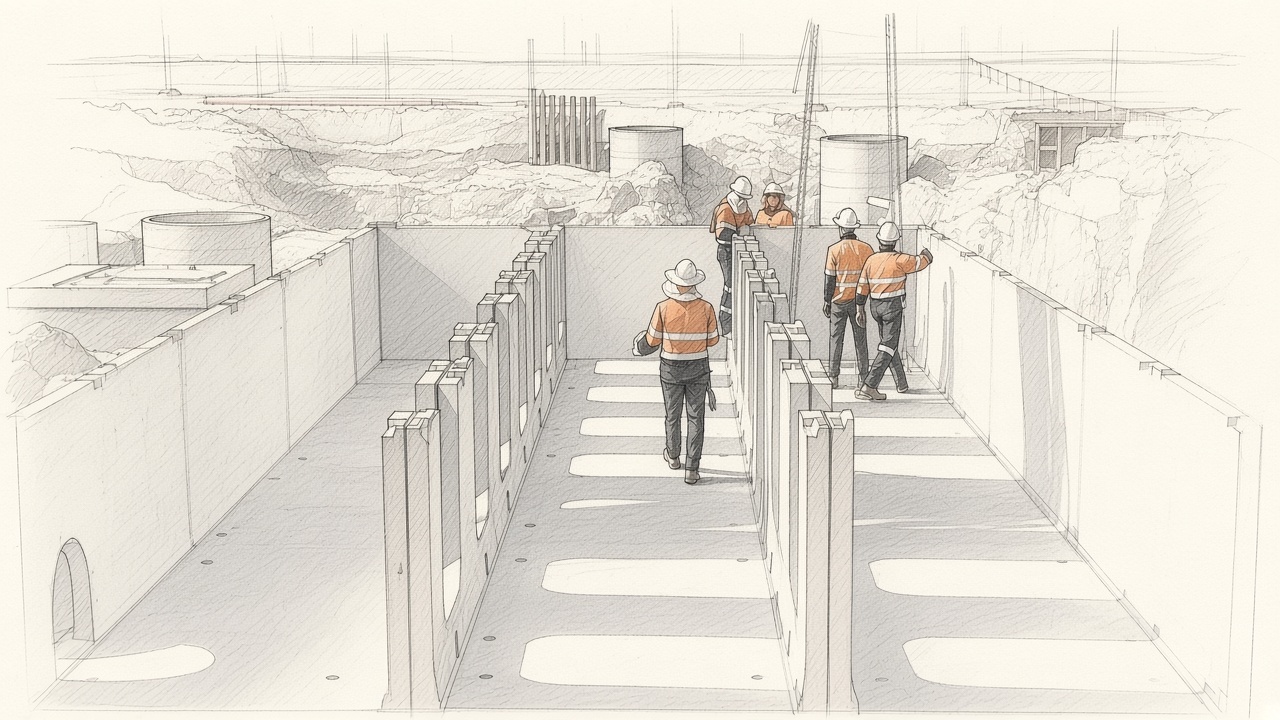
Redraw it when the stage changes
On estate and infrastructure packages the zone is part of the daily lookahead. A new trench, a kerb pour or a live-service dig means the paths and the spotter brief change with it. Tickets and competency checks stay current so only authorised operators run the machines, and the same rules apply on a tight infill lot as on an open pad.
Stop the job when the gap closes
Clear plant-and-people rules keep the work moving and the risk down. Crews know where they can stand. Operators know who owns the zone. Supervisors can stop the job the moment that separation breaks down, then restart only after the zone is set again.
Back to blog